hoosing a kindergarten is one of the first major educational decisions parents make for their child.
For families living in South Attica, the choice can be particularly important because there are many different types of early childhood education available across areas such as Lagonisi, Kalyvia, Koropi, Saronida, Anavyssos, Agia Marina and the surrounding communities.
Parents may compare schools based on location, programme, language, hours, activities, educational philosophy and cost. But beyond these practical considerations, the most important question is:
Will this environment help my child feel safe, confident, curious and ready to learn?
There is no single kindergarten that is perfect for every child. The right choice depends on your child’s age, personality, developmental needs and your family’s priorities.
Here are the most important things to consider.
1. Start with the child’s age and developmental stage
A kindergarten programme should be appropriate for the age of the child.
A child beginning preschool at 2.5 years old has very different needs from a child preparing to enter primary school.
Younger children may need more support with:
- separation from parents,
- communication,
- routines,
- sharing,
- toileting,
- dressing,
- expressing their needs,
- and developing independence.
Older preschool children may be ready for more advanced literacy, numeracy, problem-solving and school-readiness activities.
Agapeland’s programmes are structured around different developmental stages, beginning with Cocoons for children from 2.5–3.5 years, followed by Caterpillars and the older Butterflies programme.
This age-based structure is important because early education should develop alongside the child.
2. Look beyond academics
When parents search for the “best kindergarten,” it is tempting to focus on reading, writing and mathematics.
These skills are important, but they are only one part of early education.
Children also need to learn how to:
- communicate,
- listen,
- cooperate,
- make friends,
- solve problems,
- express emotions,
- wait their turn,
- respect boundaries,
- become independent,
- and participate in a group.
These social and emotional skills are essential foundations for later education.
Agapeland’s programme information specifically includes communication, respect, patience, sharing, problem-solving, friendship, accountability and teamwork among its developmental goals.
3. Consider the school’s educational philosophy
Not every kindergarten approaches learning in the same way.
Some schools have a more traditional classroom structure. Others place greater emphasis on play, creativity, outdoor experiences, movement and exploration.
Parents should ask themselves what type of environment their child is likely to enjoy.
A young child who loves movement and exploration may benefit from a programme that provides opportunities to learn outside conventional desk-based activities.
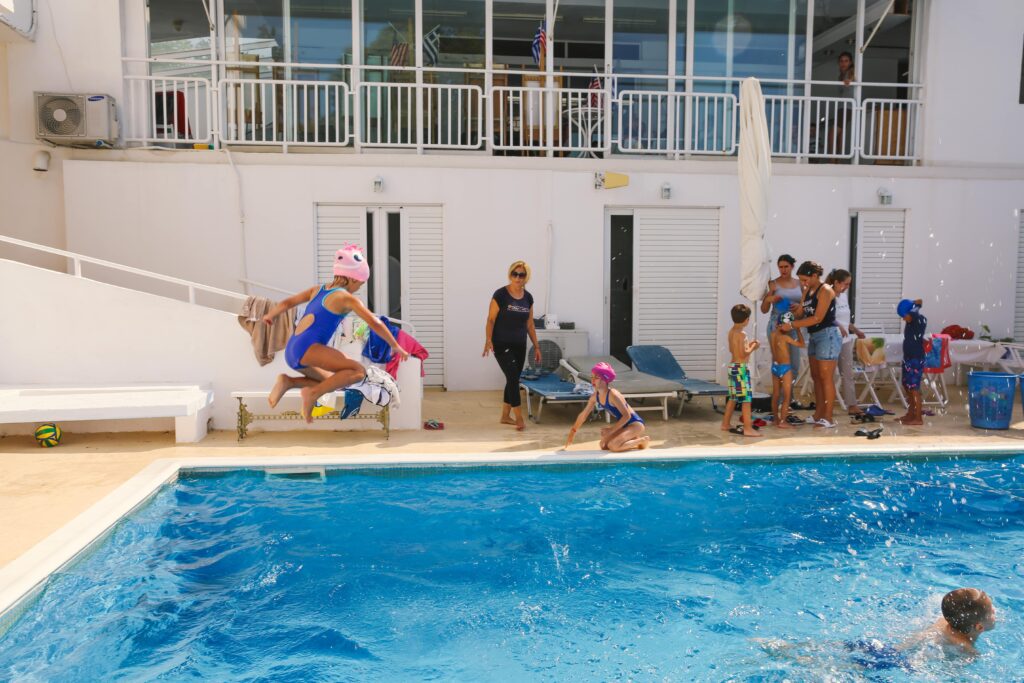
Agapeland describes its approach as combining academic learning with creativity, sport and real-world experiences. Its facilities and programme include activities such as tennis, dance, swimming, outdoor play and exploration.
4. Think about language education
For many families in South Attica, English is an important part of choosing a kindergarten.
Parents may be looking for:
- an English-speaking kindergarten,
- a bilingual kindergarten,
- English immersion,
- or a school where children can become comfortable using English naturally.
The important question is not simply whether English appears on the programme.
Parents should ask:
How is English actually used during the day?
Agapeland describes itself as an English-Greek preschool and kindergarten and offers an English immersion environment for its youngest children.
This makes language part of the wider educational experience rather than simply an isolated lesson.
5. Ask how children learn
Young children learn through interaction and experience.
A strong preschool programme can combine:
- stories,
- music,
- art,
- movement,
- games,
- puzzles,
- sensory activities,
- creative projects,
- outdoor play,
- practical activities,
- and social interaction.
Agapeland’s programme information includes arts and crafts, music, physical activities, cooking, teamwork and problem-solving alongside academic goals.
This type of broad approach allows children to develop different abilities rather than focusing on one area of learning.
6. Look at the physical environment
The physical environment matters.
During a school visit, parents should consider:
- Are classrooms welcoming?
- Is there space for movement?
- Are there outdoor areas?
- Are children able to explore?
- Are activities appropriate for their age?
- Does the school provide opportunities for physical exercise?
Agapeland’s grounds and facilities include areas for physical activity, an indoor auditorium, a multipurpose sports court and outdoor areas where children can interact with nature. The school also highlights animals, swimming and field trips as parts of its wider educational experience.
7. Ask about primary-school preparation
As children approach the end of kindergarten, school readiness becomes increasingly important.
Parents should look beyond whether children can recognise letters and numbers.
School readiness can also involve:
- listening,
- following instructions,
- concentration,
- communication,
- independence,
- problem-solving,
- social confidence,
- completing activities,
- and working with others.
Agapeland states that its kindergarten graduates are prepared for first grade whether parents choose a Greek, English or international primary school.
Its older programme also includes advanced reading and writing, mathematics, alphabet work, counting and social development.
8. Consider the daily schedule
Practical considerations matter just as much as educational philosophy.
Parents should ask about:
- opening hours,
- early drop-off,
- half-day options,
- lunch,
- full-day attendance,
- holidays,
- transportation,
- and enrolment procedures.
Agapeland currently lists early drop-off from 8:00, half-day attendance from 9:00–13:00, half-day with lunch until 13:30, and full-day attendance until 15:45. Its preschool-kindergarten programme runs from September to July.
The school also states that it accepts ESPA vouchers and offers pre-registration discounts, subject to current arrangements.
Parents should contact the school directly for current availability and terms.
9. Ask how the school supports individual children
Every child develops differently.
A good kindergarten should recognise that children may have different strengths, personalities, interests and learning needs.
Agapeland states that it welcomes a small number of children with special educational needs and can provide support through a dedicated shadow teacher.
This is something parents should discuss directly with the school if their child requires additional support.
10. Visit before making the decision
Online research is useful, but it cannot replace a school visit.
When you visit a kindergarten, pay attention to the atmosphere.
Do the children seem engaged?
Do teachers communicate warmly with them?
Does the environment feel calm and organised?
Do you feel that your child could be comfortable there?
It is also useful to prepare questions in advance.
Questions parents can ask
- What does a typical day look like?
- How are new children helped to settle in?
- How much English do children hear during the day?
- What activities are included?
- How much outdoor time do children have?
- How are social skills developed?
- How is progress communicated to parents?
- How are children prepared for primary school?
- What happens if a child needs additional support?
- What are the current hours and enrolment requirements?
Why Consider Agapeland?
For families searching for a kindergarten in South Attica, Agapeland in Lagonisi is an option worth exploring.
The school combines a bilingual English-Greek environment with creative learning, physical activity, outdoor experiences and age-specific programmes. It serves children from approximately 2.5 years through the preschool and kindergarten years.
Its programmes are designed around different stages of development, while its broader approach includes language, academics, creativity, sport, social development and real-world experiences.
For families living in Lagonisi, Kalyvia, Koropi, Saronida, Anavyssos and nearby areas, visiting Agapeland can help parents decide whether its environment is right for their child.
If you are comparing kindergartens in South Attica, contact Agapeland and arrange a visit to see the school, meet the team and learn about the current programmes.